Revol One Financial
A Unified System for Agents and Consumers
Project overview
During my time at Strategic America, I worked to improve RevolOne Financial’s website and agent portal, both built for licensed financial professionals. Agents are the gateway for consumers, so every experience needed to feel clear, efficient, and trustworthy.
I worked to evaluate the existing UX, align both platforms with the refreshed brand, and uncover opportunities to better support education, sales workflows, and future growth in a competitive, fast-moving industry.
Duration
• October 2024 – April 2025
Role
• Lead UX/UI Designer
• User Research
Team
• 1 UX Designer
• 1 Client Manager
• 1 Web Administrator
• 1 Front End Developer
Tools
• Figma
• Adobe XD
• Adobe Illustrator
• Adobe Photoshop
• Lyssna
• WordPress
The Challenge
The engagement spanned two closely related but functionally distinct experiences: a consumer-facing website and an agent portal. Each had unique users, goals and constraints, yet both needed to feel cohesive, current and aligned with a refreshed brand—within a compressed timeline.
Website Challenges
- The site had become visually stagnant, with dated imagery, CTAs, and limited flexibility for ongoing updates.
- Internal teams did not have dedicated resources to maintain or evolve the site over time.
- The primary goal of the site was education, but content structure and hierarchy did not support that clearly.
- Timeline constraints required visible improvements in a much shorter window than a traditional full redesign, necessitating a phased rollout rather than a single, comprehensive launch.
Portal Challenges
- The portal supported multiple user types—individual agents and firms—with different visibility into data and workflows.
- Interfaces relied on data aggregated from several external systems, limiting flexibility in layout and interaction patterns.
- Frequent users struggled with dense pages, unclear labeling and limited feedback on time-sensitive actions.
- Competitive research was constrained, as comparable agent dashboards require authenticated access, requiring alternative approaches to visual and UX research.
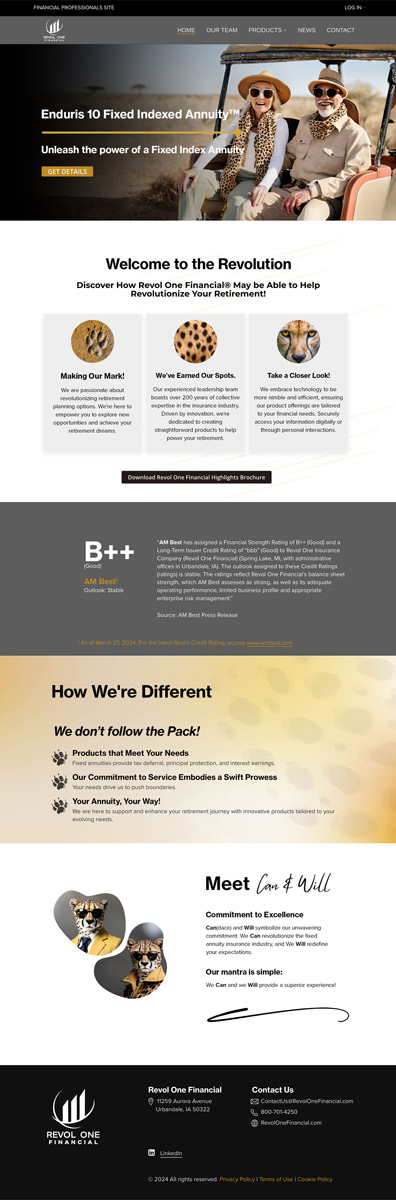
The home page used visuals that lacked a strong connection to the audience, with limited use of color and hierarchy to guide users through content or emphasize key messages.
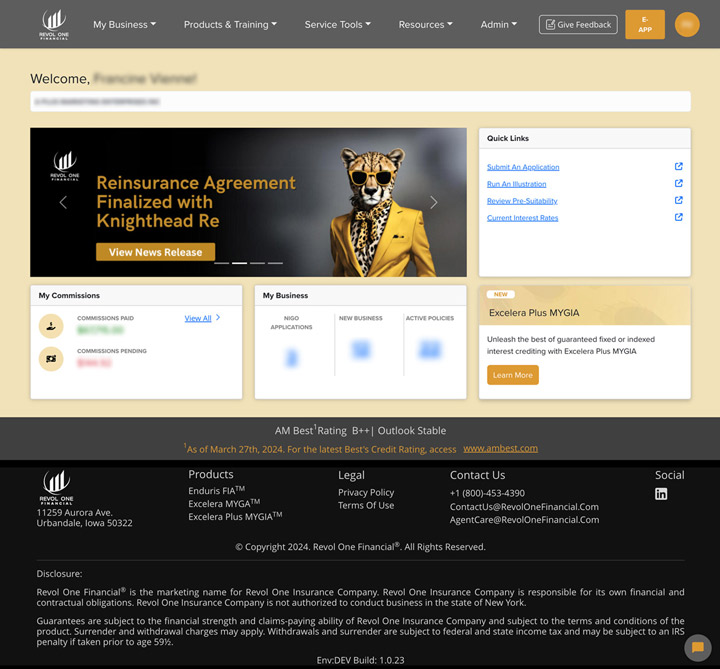
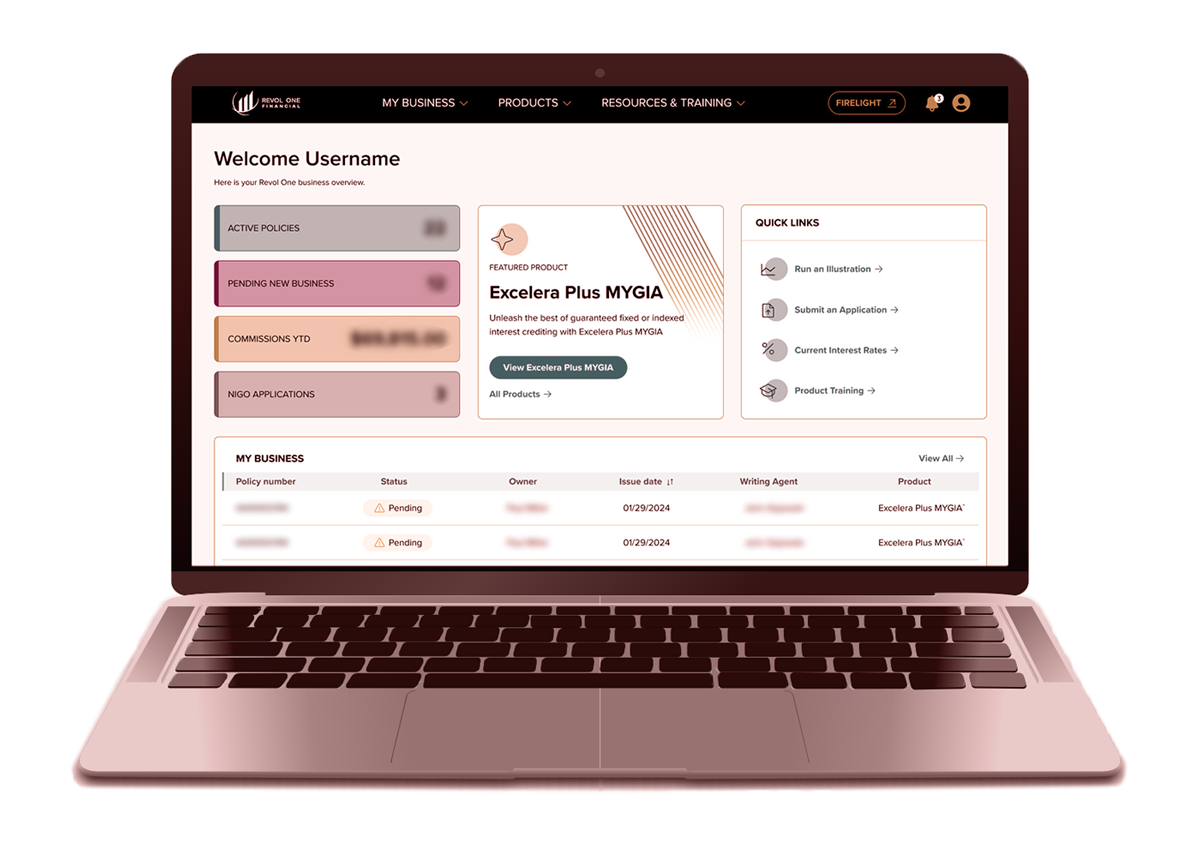
The dashboard did not prioritize agents’ top tasks and featured a large image banner, reducing efficiency for frequent users.
Discovery
Discovery focused on understanding agent workflows and identifying the highest-impact opportunities across both the website and the agent portal. Given the accelerated timeline, research efforts were intentionally weighted toward the portal, where usability issues had the greatest day-to-day impact and where decisions carried higher operational risk.

Website Discovery
Constraint-Driven Insights
Rather than formal UX research, the website work was informed by:
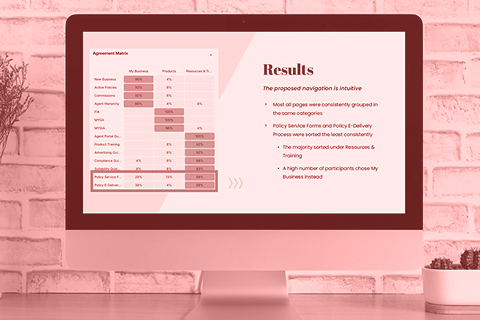
- A closed card sort exercise with licensed agents to validate labeling and information architecture
- Hotjar recordings and heatmaps to identify high-traffic areas, friction points, and overlooked content
- Qualitative feedback from frequent portal users to understand task priorities and pain points
These inputs helped define where incremental improvements—particularly to hierarchy, visuals and CTAs—would deliver immediate value within a phased rollout.
Agent Portal Discovery
Primary Research
Discovery for the portal relied on direct input from existing agents and behavioral data, including:
- Stakeholder interviews and feedback from sales representatives
- Content and visual audits to identify stagnation, redundancy, and misaligned priorities
- A category scan of peer and competitor financial services websites to understand common patterns, visual expectations, and baseline approaches to education and trust
This combination of research surfaced consistent themes around navigation clarity, visibility of action items, and the need for faster access to core tasks—insights that informed both portal-specific decisions and shared patterns applied across the broader experience.
Design
Design progressed along two parallel tracks. For the agent portal, findings from the card sort exercise and heatmap analysis informed the structure of a new dashboard structure, reorganizing information around agents’ most frequent tasks and clarifying priorities across the experience.
For the consumer website, design focused on introducing new colors to the palette and stronger visual hierarchy to better support education and allow for incremental updates as part of a phased rollout.
Agent Portal
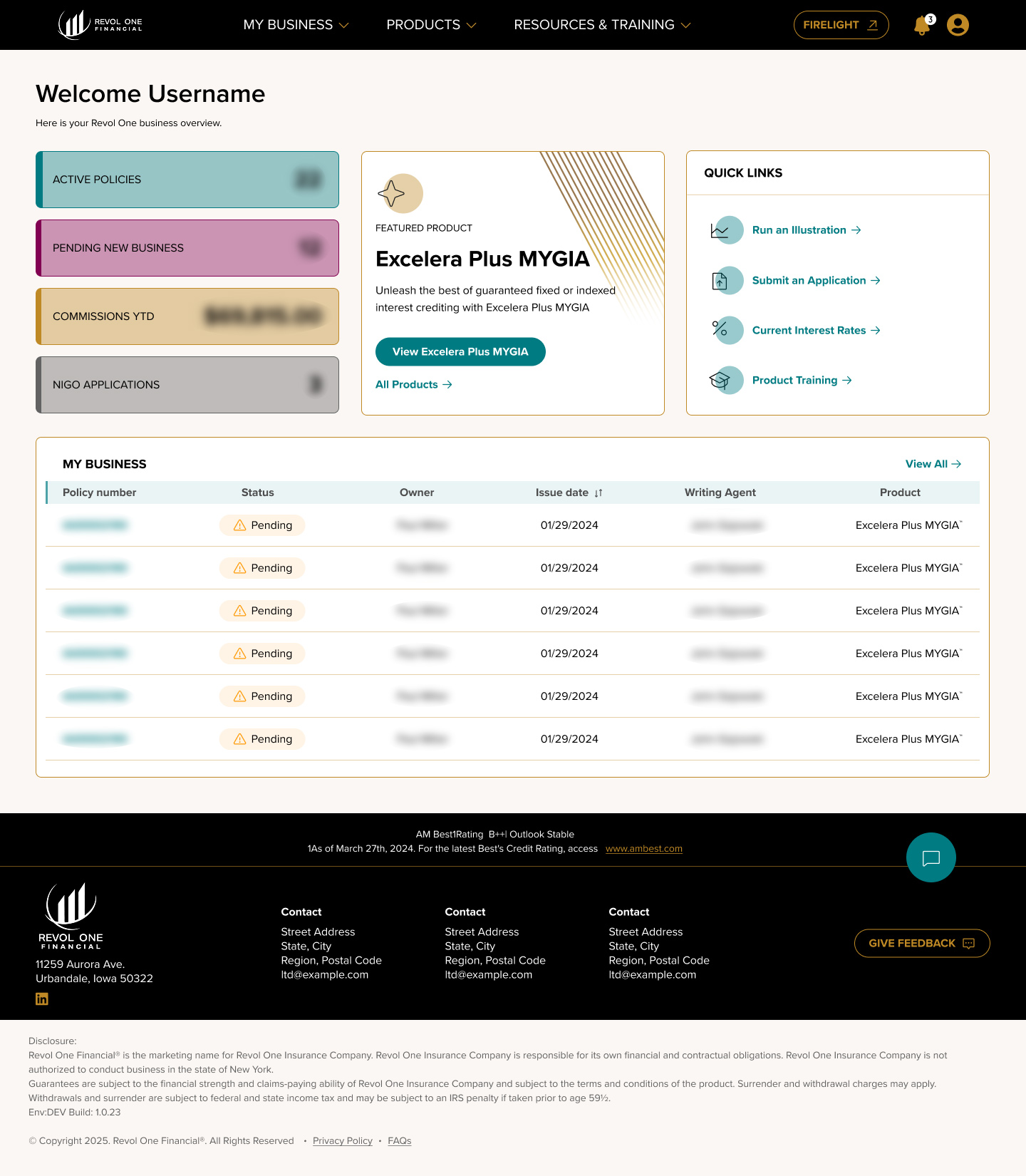
Design for the agent portal reorganized the dashboard around agents’ most frequent tasks. Structure, labeling and hierarchy were informed by card sort and heatmap findings, resulting in a clearer, more efficient experience aligned with the updated brand.
Consumer Website
Home and product page layouts elevated primary user tasks through clearer visual hierarchy and more intentional content grouping. Dense financial information was reorganized into smaller, scannable sections to improve readability and focus across key pages.
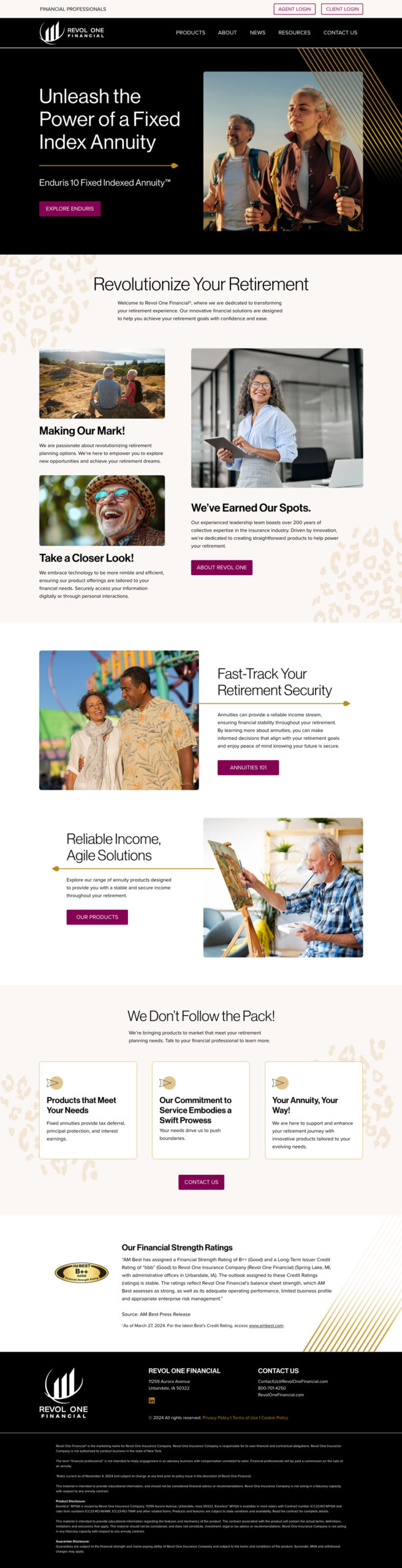
Clear typographic hierarchy and content grouping emphasize primary actions and make educational content easier to scan.
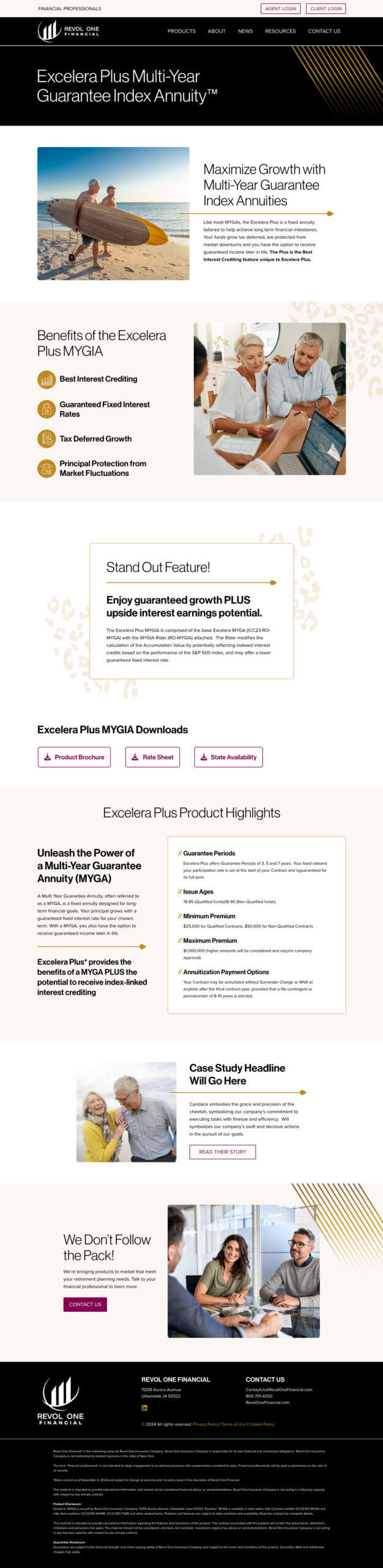
Dense financial information is broken into smaller sections to improve readability and support informed decision-making.
The Result
The consumer website updates were launched in phases, allowing the client to quickly realize improvements in visual design and usability while continuing to evolve the site over time.
For the agent portal, a redesigned dashboard and supporting style guide gave the development team a clear, scalable foundation. This enabled the portal to align with the refreshed brand, improve task-focused workflows, and support ongoing growth as development capacity allowed.