Nebraska Corn Board
All About Nebraska Corn, All in One Place
Project overview
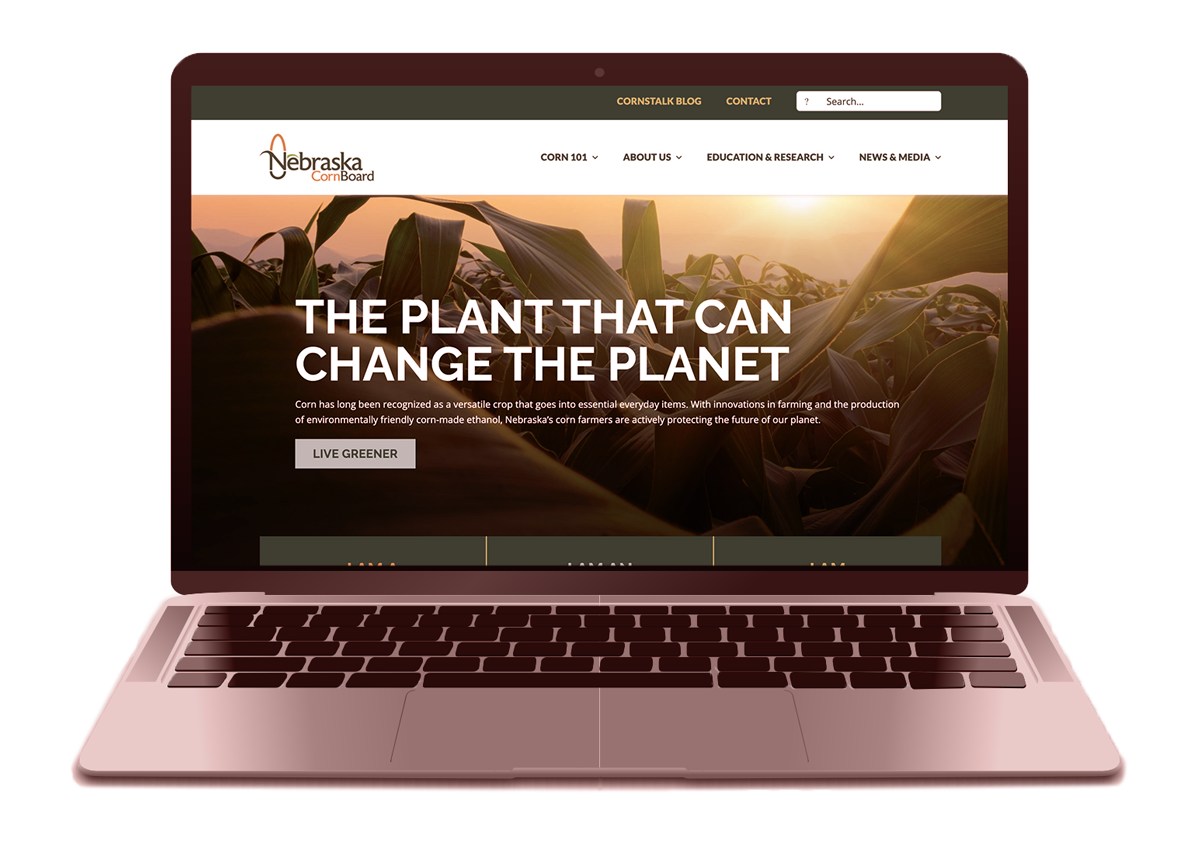
During my time at Strategic America, I led the information architecture and digital art direction for a consolidation of four separate Nebraska Corn Board sites into one unified, scalable platform. The goal was a cohesive structure that could serve audiences from consumers and students to media and policymakers—making the latest research and resources easy to find while keeping the story of Nebraska Corn clear, trustworthy, and approachable.
Duration
• November 2021 – October 2022
Role
• Information Architecture
• Digital Art Direction
Team
• 1 Digital Art Director
• 1 Digital Designer
• 1 Content Strategist
• 1 Project Manager
• 1 SEO Analyst
• 2 Web Developers
• 1 Web Administrator
Tools
• Adobe XD
• Adobe Illustrator
• Adobe Photoshop
• Microsoft Excel
• WordPress
The Challenge
With multiple sites serving different audiences, it was difficult for users to find information and for the team to keep content organized. The site needed a cohesive structure that could support diverse needs while making updates easier and more intuitive.
Key Problems
1. Four separate sites, one organization
Content lived across four websites, creating fragmentation for users and unnecessary complexity for the internal team managing updates.
2. Overlapping content without clear hierarchy
Core topics like corn uses, ethanol, sustainability, and research appeared in multiple places, often without a clear structure or prioritization.
3. Diverse audiences with different goals
The site needed to serve casual consumers, students exploring agriculture careers, media seeking talking points, and policy-focused visitors—without feeling disjointed.
4. Frequently changing information
Research, data, and policy-related content were updated often, but the existing structure made it difficult to surface timely information or guide users to the right next step.
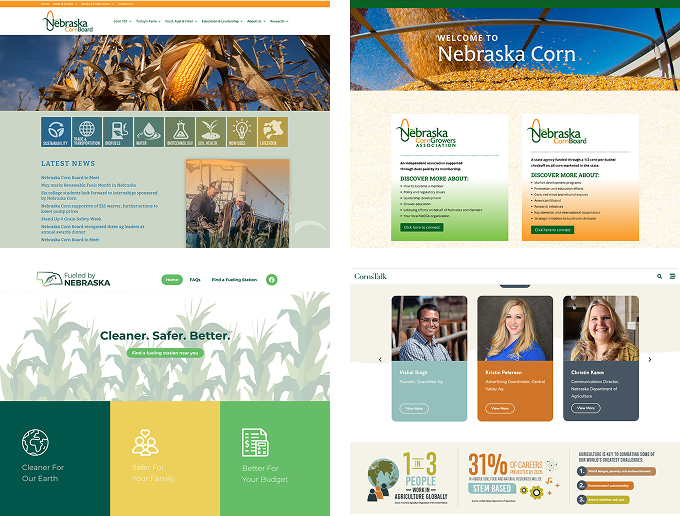
Four separate websites made it difficult for users to find information and for the team to maintain content. Consolidating these experiences was a key driver for the new information architecture.
Proposed sitemap
Working with the SEO analyst and content writer, I incorporated insights from their content audit to guide consolidation and reduce redundancy.
From a UX perspective, I focused on intuitive grouping and clear labeling, creating a sitemap that makes navigation simple for all audiences—while keeping the structure scalable for future updates.


Visual Direction
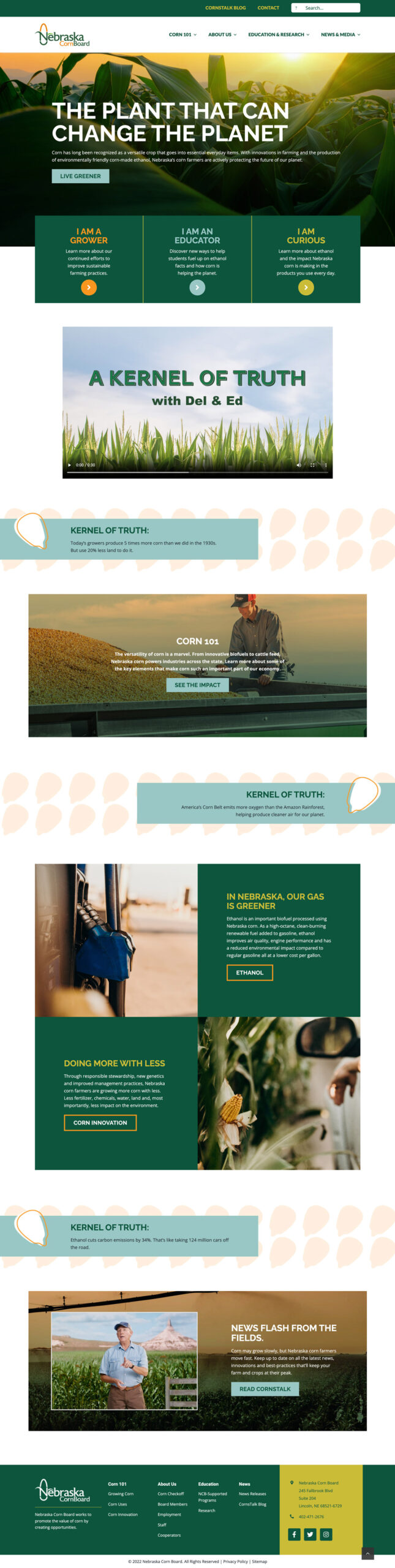
With the proposed structure in place, I partnered with the digital designer and creative team to ensure the website’s visual execution supported the new information architecture. My role focused on providing digital art direction—guiding how layout, hierarchy and imagery could reinforce clarity, cohesion and ease of use across the site.
The direction ensured the website carried through the look and tone established in existing print materials, while adapting it for a flexible, content-heavy digital experience.
The Result
The final site provided the Nebraska Corn Board with a more cohesive and sustainable digital foundation, supporting both external audiences and internal teams.
By the numbers
In the year following launch, organic search sessions increased 210% year over year, growing from 49,599 to 153,501 sessions. Engagement rate nearly doubled, climbing from 37% to 63%, and average engagement time increased from 43 seconds to 1 minute 15 seconds.
Key Outcomes
• Stronger SEO foundation
Consolidating content into a single, well-structured site improved crawlability, reduced duplication, and strengthened overall search performance.
• Clearer, more unified brand presence
Aligning the website with updated brand materials helped reinforce consistency across channels and present a more credible, modern experience.
• Simplified content management
Moving from four sites to one made it easier for the internal team to update content, manage research and data and respond to media and policy needs.
• More intuitive information architecture
The new information architecture reduced friction by organizing content more logically, helping users reach relevant information quickly and confidently.
The Evolution
Since launch, the site has grown with frequent updates, new pages, and additional sections. In 2025 the homepage was refreshed to reflect updated priorities.
I continued to guide design and planning for these updates, ensuring new content fit seamlessly within the existing structure and visual system.